
Colorado Arrest Log Landscape
Colorado has no central arrest log. Each county sheriff chooses a format. Some publish weekly intake PDFs, others dated booking summaries, current rosters, or narrative activity reports. The date ranges and purposes differ. No single log adds up to a statewide count of arrests.
Match the tool to the question. A booking report fits jail intake. A live roster shows current custody. A blotter covers selected calls and events. News adds context or later court updates but rarely shows custody. For the same-day window, the Colorado 24 Hour Arrests page is narrower. Every county source runs through the County Directory.
Colorado Blotter and Report Types
County reports run on different clocks. A daily title can mean a dated snapshot. A weekly intake sheet may lag behind the live roster. Check the source's label before treating an entry as current custody. These examples are not a catalog. A county may offer only a roster, a phone line, a records request, or no public list at all.
| Official pattern | Colorado example | What it does not establish |
|---|---|---|
| Weekly intake | Archuleta Weekly Intakes | Multi-day, not live custody. |
| Dated daily archive | Gunnison Inmate Daily Roster | Online dates are not a retention promise. |
| Booking summaries | Mesa Blotter Reports; San Miguel Activity Logs | A booking summary is not every police event. |
| Narrative blotters | Summit Justice Files | Selected activity, not every booking or live roster. |
| Date-search reports | Weld legacy report; Teller Crime Reports | May mix bookings with releases, warrants, or summonses. |
| Agency newsroom | CSP and local police releases | Selected accounts, not a complete arrest database. |
The Archuleta County Weekly Intakes page posts a dated multi-day intake sheet. A separate roster there tracks current status.
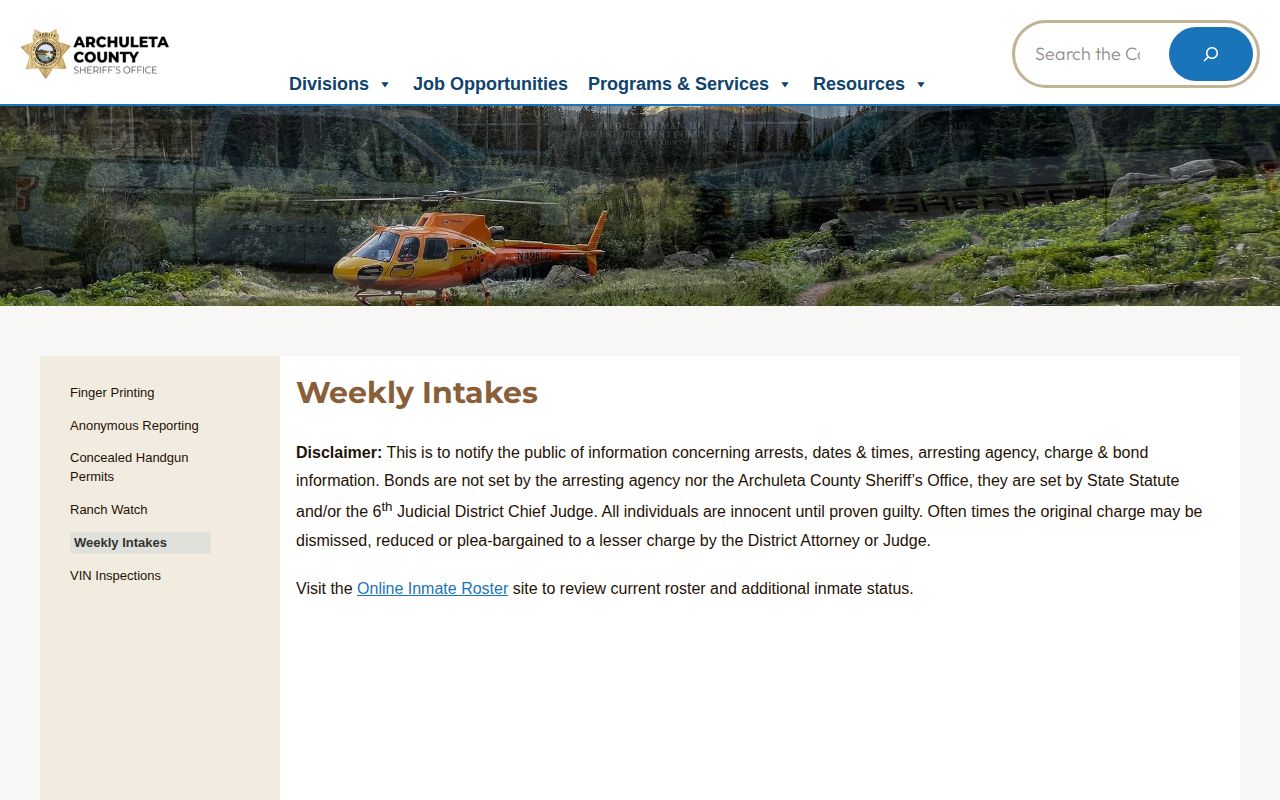
For current custody, check the separate roster. The Summit County Justice Files page labels a weekly summary of selected police activity.
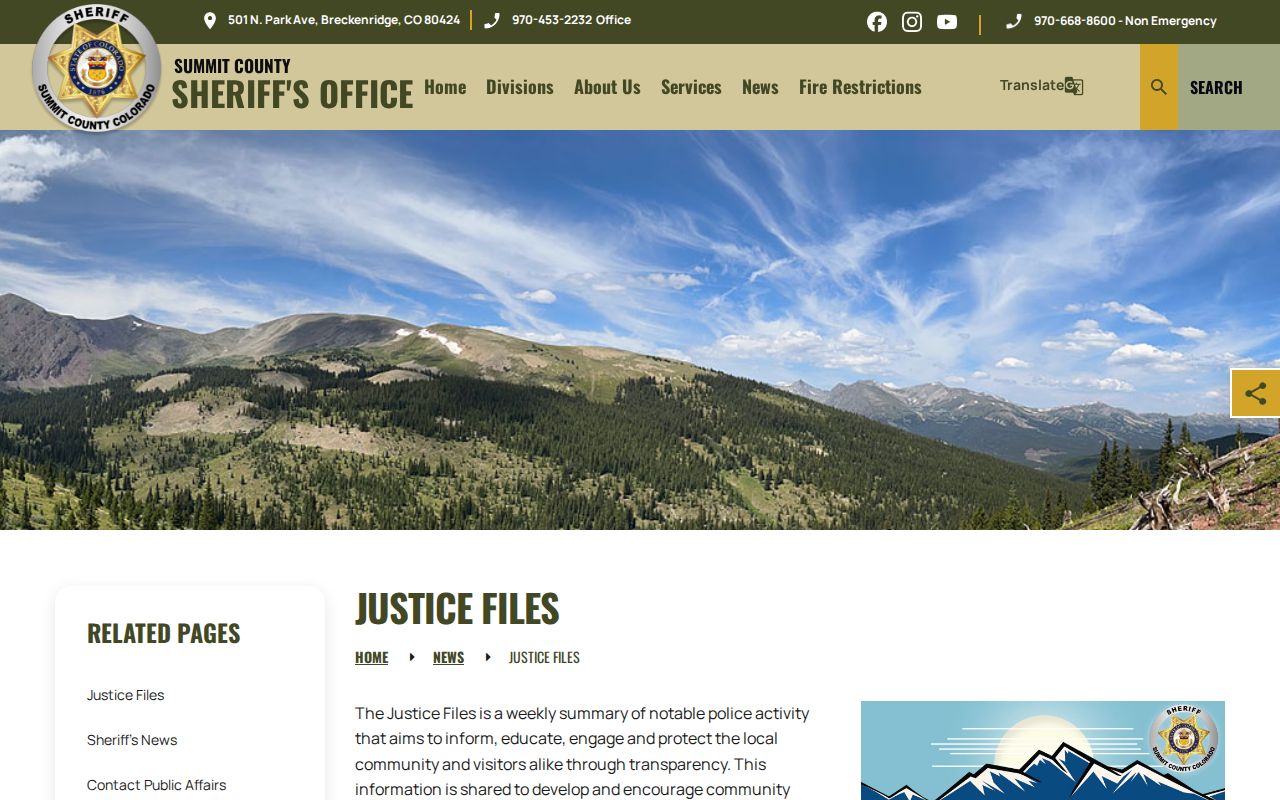
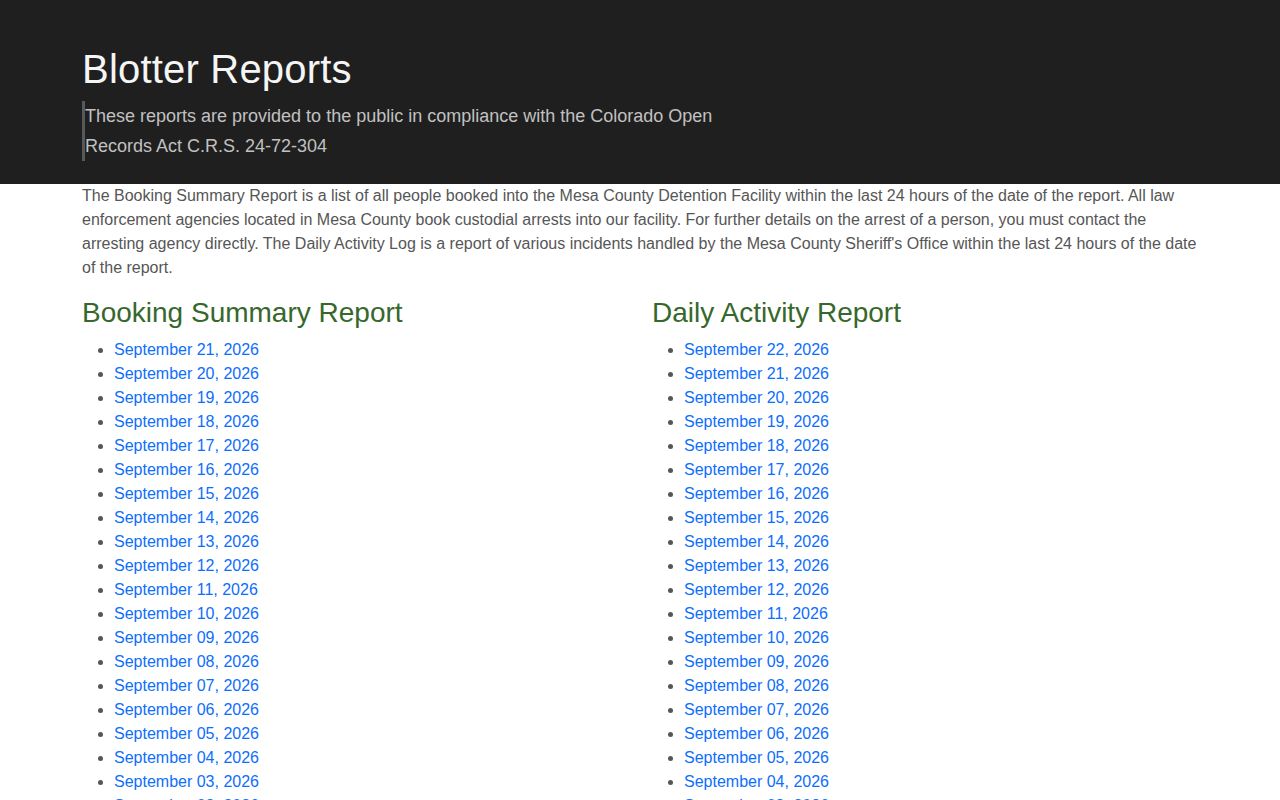
A narrative summary gives the story; the jail record shows who was booked. Mesa's Booking Summary covers bookings in the 24 hours before its report date. Its Daily Activity Report covers sheriff's office incidents. San Miguel keeps things cleaner. It separates its Booking Summary, Current Inmate List, Media Summary, and week-to-date calls. Its summaries span roughly a week. The San Miguel County Activity Logs hold each view apart.
Note: A weekly narrative and a current roster answer different questions even within the same county.
Colorado Arrest Log Entries
Colorado arrest logs have no uniform fields. One row may describe intake, a police call, or a selected action. Read the label and the date; treat this table as a prompt, not a promise.
| Entry detail | Question to ask |
|---|---|
| Date or period | Arrest date, booking date, report date, or multi-day span? |
| Booking or intake | Jail entry, or an incident account only? |
| Current custody | Live status, or an older event? |
| Agency and narrative | Who authored it, and what details were selected? |
| Charge or warrant | Booking charge, warrant, summons, or other event? |
| Photo | Shown by the source, or handled by Records? |
Read each entry in order:
- Identify whether it is a booking report, roster, call log, or summary.
- Check the report date, range, or generation time.
- Read the agency and event label; a warrant or summons is not proof of new jail intake.
- Use the live roster for custody and the court for case outcomes.
- Ask the agency records unit when a needed date is no longer online.
Weld's legacy report sits apart from its newer app and can lag by a day. The Weld County Jail Reports app separates Arrests from Releases and Current Inmates, while the Teller County Crime Reports page can mix bookings with releases, warrants, and summonses.
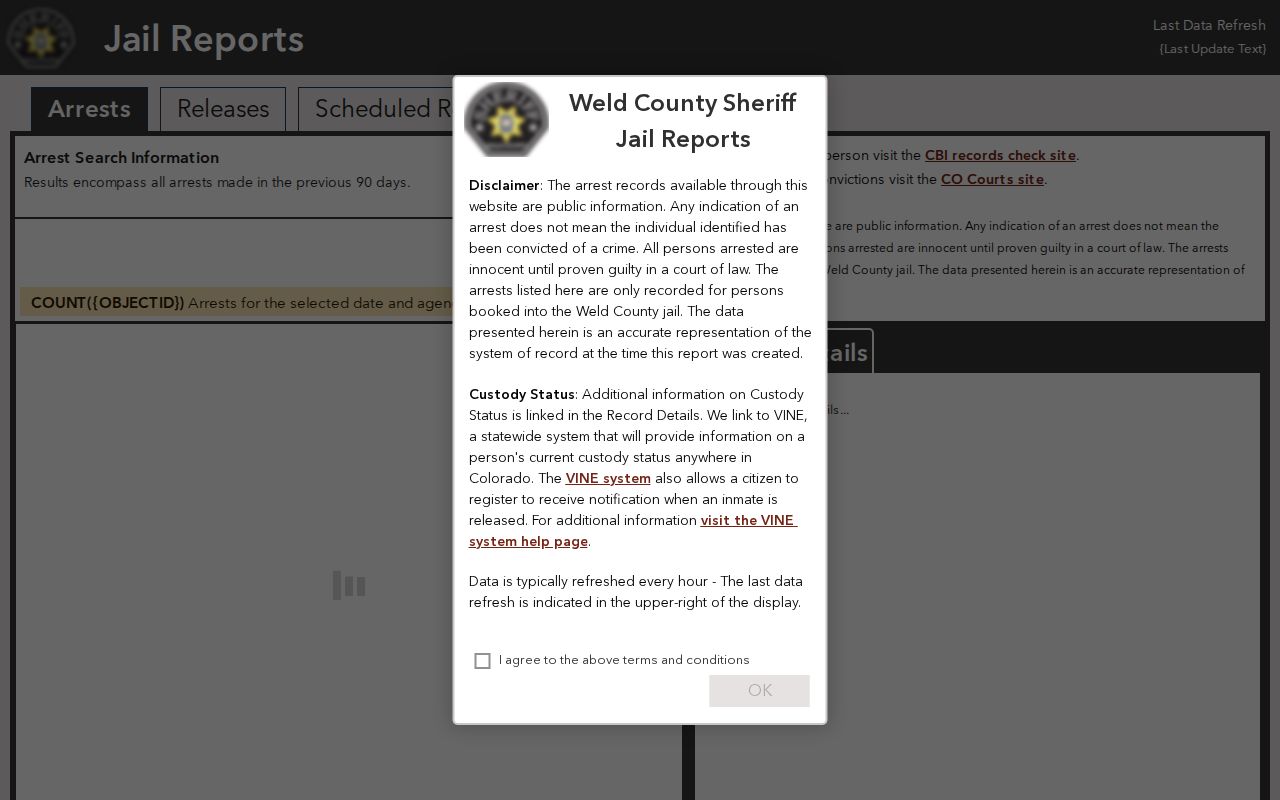
A legacy page and a current app answer different questions. Ask whether an older report remains available or was destroyed under a retention schedule.
Colorado State Patrol Arrest News
The Colorado State Patrol (CSP) posts selected releases. Topics include arrests, traffic enforcement, crashes, warrants, and safety operations. It publishes no daily arrest roster. It posts no CAD or dispatch log and no statewide booking feed. A press release is not a patrol blotter. Expect a date, a region or county, and the involved agency. An event narrative, selected names or charges, statistics, or a contact may follow.
CSP runs six communications centers and five districts or troops. That structure does not create public incident logs. A trooper's arrest has several endings. It may mean booking in the county serving the stop, a transfer, or a citation and release. The receiving county is the custody source; CSP keeps its patrol report. The CSP press-release archive collects selected agency news.
CSP and CDOT also run periodic DUI and traffic campaigns. The CDOT traffic-safety mobilization hub gives campaign context. Each total applies only to its own operation and period.
Colorado News Arrest Coverage
News outlets choose which incidents to cover. None publishes a booking index. A story may add an agency statement or a court update. Its image may not be a current booking photo. Coverage can linger online long after a county roster changes.
CPR News often covers Colorado justice policy. The Colorado Sun reports on justice, corrections, and courts. Both are secondary. Verify an arrest with the agency and later outcomes with the court.
The Colorado Sun's editorial standards accept free factual correction requests. They state that takedowns are generally denied unless a story is fundamentally flawed. A correction is not a right to remove accurate reporting. The other outlets list no general removal promise.
Note: Selected coverage needs verification with the arresting agency. Case outcomes belong to the court.
Colorado Weekend Log Timing
Jails never close, but public reports follow their own cycle. A weekly PDF, a dated snapshot, or an app refresh may appear well after intake. A blotter's time is not always the arrest time.
Arrest timing varies by county. Boulder publishes a date grid. Garfield refreshes its PDF roughly every two hours. Larimer's current-day view may not show up until morning. Mesa posts a prior-24-hour arrest window, while Weld splits hourly arrests from its current inmate list. Check the report date and stated window before drawing conclusions. Colorado has no shared weekend cutoff for booking logs.
Colorado Courts Set Outcomes
A booking log shows intake. It is not a court file. The Colorado Judicial Branch keeps the filings, hearings, and final outcomes. A dismissal, plea, or judgment is a disposition, which is the court's recorded result. Charges often shift as a case moves forward. Treat the jail roster and the docket as two separate records. Someone can be in custody on an old case, or have an active case while free. After an arrest, the docket tells you what happened. The jail source tells you booking and custody status. The Colorado Judicial Branch docket search is the official court-side starting point for filings and case progress.
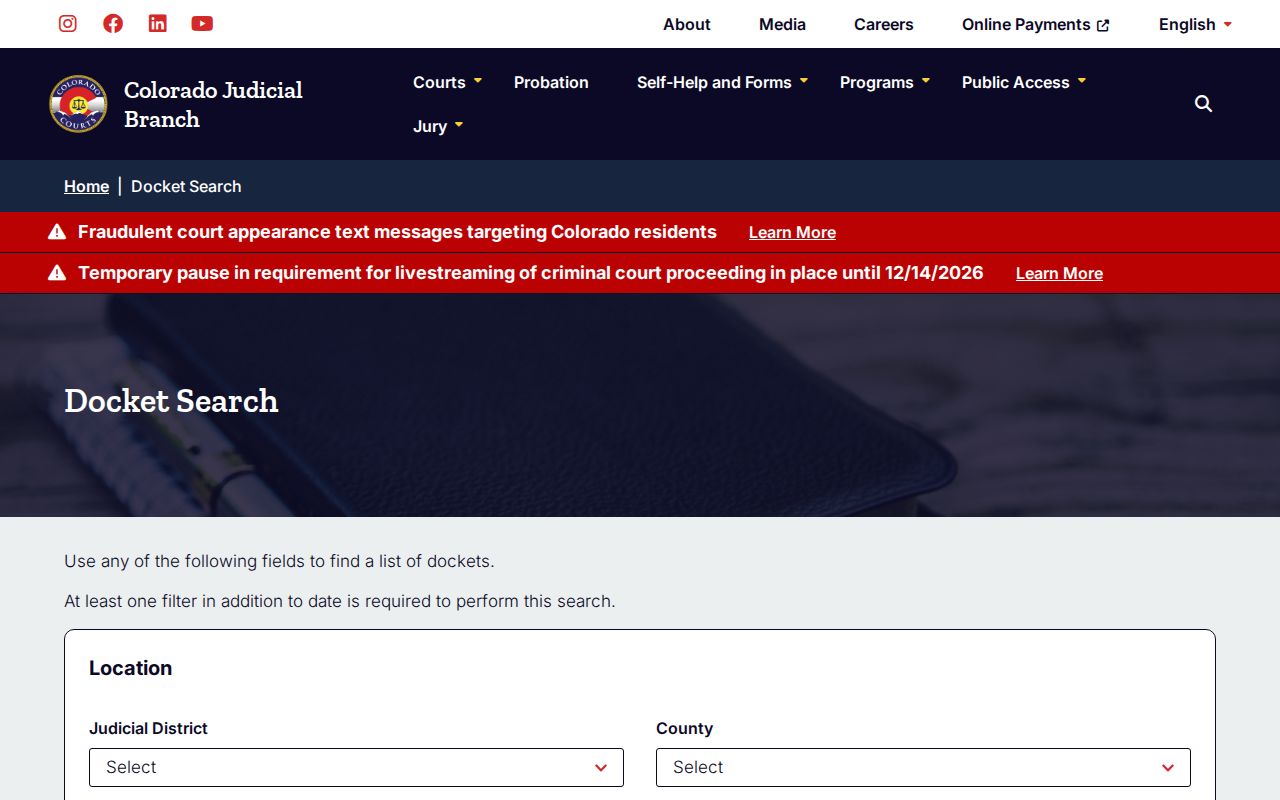
The docket screen is a court search. It belongs to the judicial record, not the arrest feed.
Colorado Arrest Archives and Retention
An arrest record that vanishes from a website is not destroyed. The Colorado State Archives sets retention schedules. These apply to state and local agencies. A schedule may allow destruction or demand permanent keeping. The span turns on the agency and the record series. A pending case can also hold a record in place. So can a claim, action, or audit. A roster that rolls off screen says nothing. The booking record behind it still exists. The Colorado State Archives records-management program explains how the schedule framework works. Gunnison's dated archive shows only what a public site keeps visible. The Gunnison County Inmate Daily Roster archive lists snapshots with generation times.
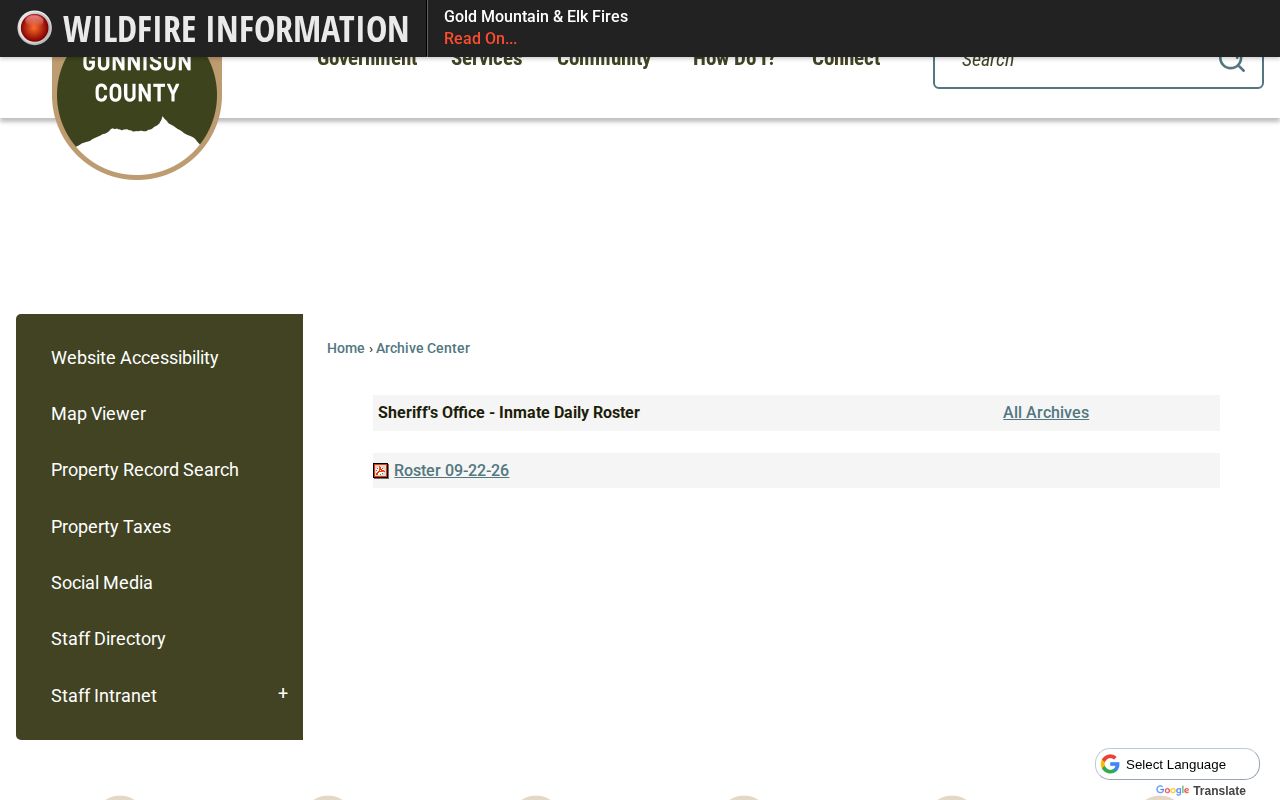
That printed time dates the snapshot itself. For an older booking, contact the county records unit to ask whether a copy remains. Request it under the Colorado Criminal Justice Records Act (CCJRA). The State Archives takes requests online, by email, or by mail. Include identifying details and a date span. Its record-request page lays out the process, though no universal turnaround is promised. Requests and in-person viewing are free, but copies may cost. Mesa keeps booking summaries apart from sheriff's incident reports. Its Mesa County Blotter Reports page lists entries by date.
Note: Online archive depth shows what a publisher displays now, not the retention span or completeness of the underlying records.