
Colorado State Patrol Arrests
The Colorado State Patrol is a division of the Colorado Department of Public Safety. It covers the whole state. CSP is a highway and traffic agency, not a county jail operator. Troopers arrest drivers after traffic stops, DUI enforcement, warrant service, or crash investigations. They also join broader public-safety operations. A trooper's arrest power does not decide which jail holds the person afterward.
That split matters. When someone asks where an arrest record lives, the answer depends on one thing. It turns on which office holds the record. CSP keeps the patrol report, citation, field record, or release paperwork. A county jail keeps the booking record and custody entry once it accepts the person. The court keeps the case filings and the final outcome. Each source answers a different question.
No single record tells the whole story. Match the report to the right person and date. The court file gives the case result.
Where Colorado CSP Arrest News Appears
CSP shares what it chooses. A release may cover an arrest, a crash, a warrant, an enforcement operation, or a follow-up. The archive is not a daily arrest database. The agency handles dispatch and communications work too. Yet it publishes no daily arrest roster, statewide booking feed, or incident-level dispatch log.
| Official channel | What it provides | Limit |
|---|---|---|
| CSP press-release archive | Selected releases with dates, regions or counties, incident details, involved agencies, and sometimes names or charges. | Selection by the agency means an unlisted arrest may still have occurred. |
| CDOT traffic-safety mobilizations | Campaign context for traffic enforcement involving CSP and local agencies. | Campaigns are bounded operations, not a current booking count. |
| Daily activity or dispatch listing | No verified public CSP daily arrest or CAD log was located in the statewide research. | Dispatch operations do not establish that incident-level records are published online. |
| CSP records request | Request a patrol, arrest, field, or crash-investigation record from its custodian. | Access, redactions, fees, format, and timing depend on the record. |
The CSP press-release archive is the agency's official news page. Releases there can give a date, region, event narrative, involved agency, selected names or charges, statistics, and follow-up details. Start there for patrol news.
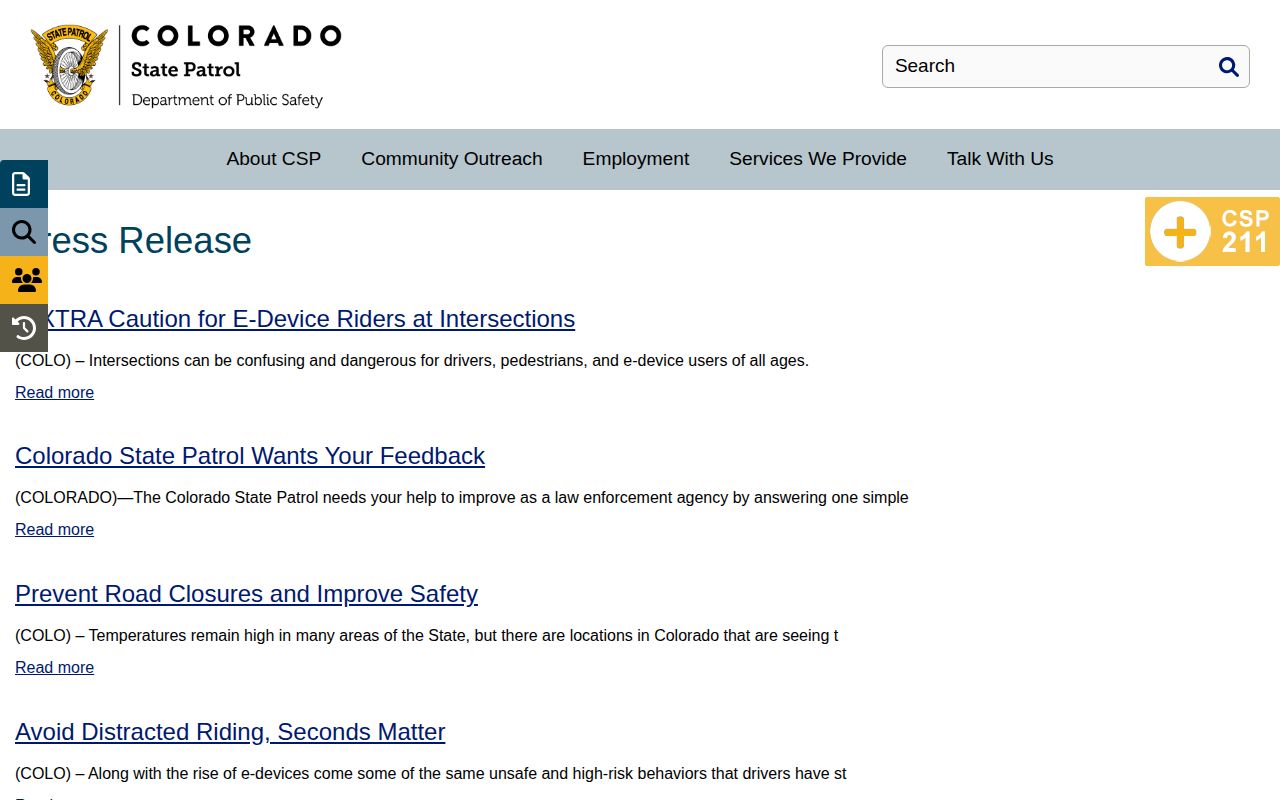
The image shows the State Patrol's newsroom stream. Those entries are public communications. They are not a roster of every person CSP books. Some releases name a county or another responding agency. That detail helps place an event, but it cannot replace the jail's custody system or the CSP report custodian.
Note: An archive's newest entry marks its latest release, not necessarily the most recent arrest statewide.
Find a Colorado State Patrol Arrest
Match the source to the question. A newsroom release is only a public summary. A county jail page shows whatever booking and custody fields that county publishes, while CSP's records unit holds the agency's own records, and the arresting agency and the booking custodian can differ. A practical search path is:
- Search CSP's release archive by the likely incident date, region, or event terms. Treat a missing release as an incomplete result, not proof that no arrest occurred.
- Identify the county where the stop or arrest took place, if known. A county's official booking page may be date-selected, current-custody only, or unavailable online.
- Use the Colorado County Directory to reach that county's own source and check its published booking or custody view.
- For a fresh event, use the county view's stated date and update time. The statewide same-day arrest overview explains why counties use different windows.
- Ask CSP for the patrol record when the needed item is a report, citation, or field record rather than the jail's current status.
Log every result with its source and timestamp. A county roster can change after release or transfer. A dated booking report may stay visible after custody ends. When the question is whether a case was filed or how it ended, the court record is the right source.
Where Colorado CSP Arrests Are Booked
CSP patrols the roads. It does not run jails. A patrol arrest can end several ways. The person may be booked at the county facility serving the arrest location, transferred elsewhere, cited and released, or held for another agency. That county roster is the practical custody source. CSP keeps its own report, citation, or field record. The county screens below show official booking systems, not a CSP feed. The Eagle County Booking Search is one example. It returns county-level booking and release date fields.
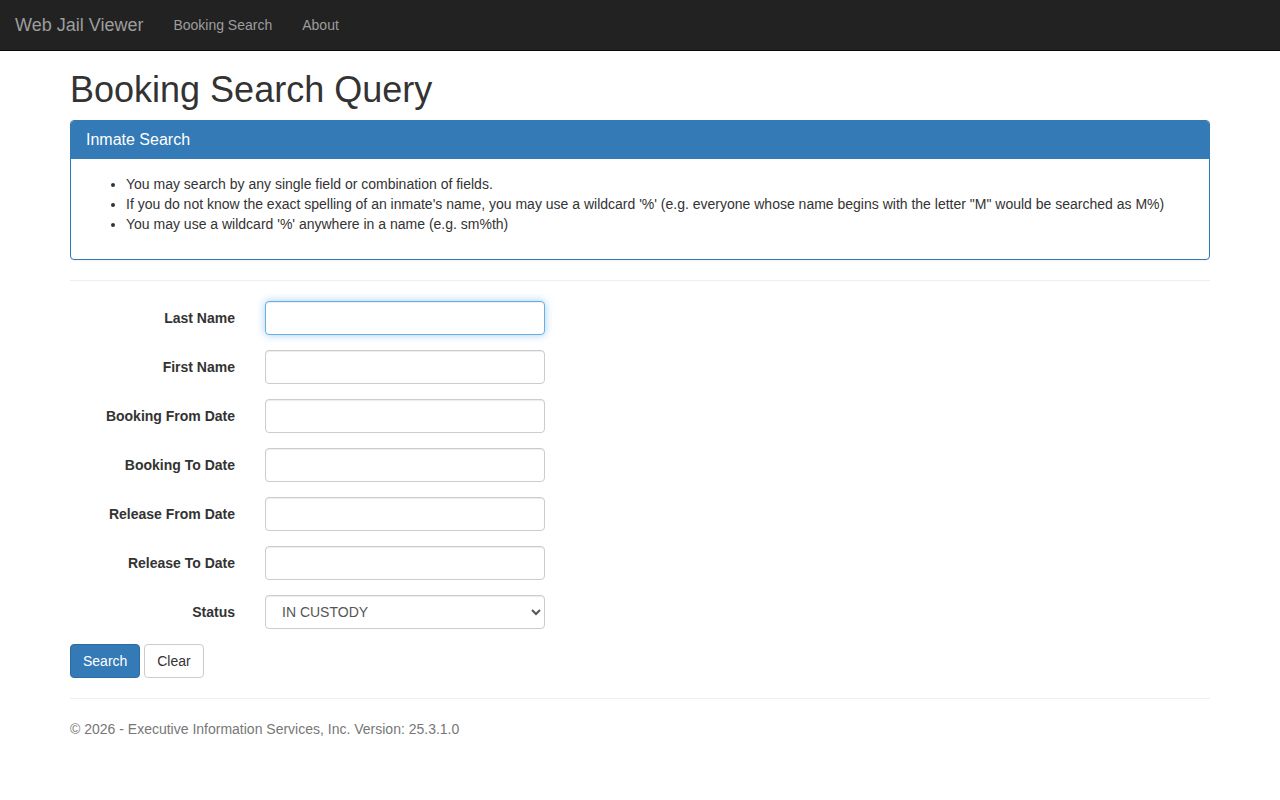
The Eagle County screen shows how one county handles date and name searches. Its results follow county rules. Mesa County takes a different approach. Its Booking Summary lists people booked into its detention facility. The window is the last 24 hours. That period runs up to the report date. The Mesa County Blotter Reports page keeps that summary separate from its daily activity report.
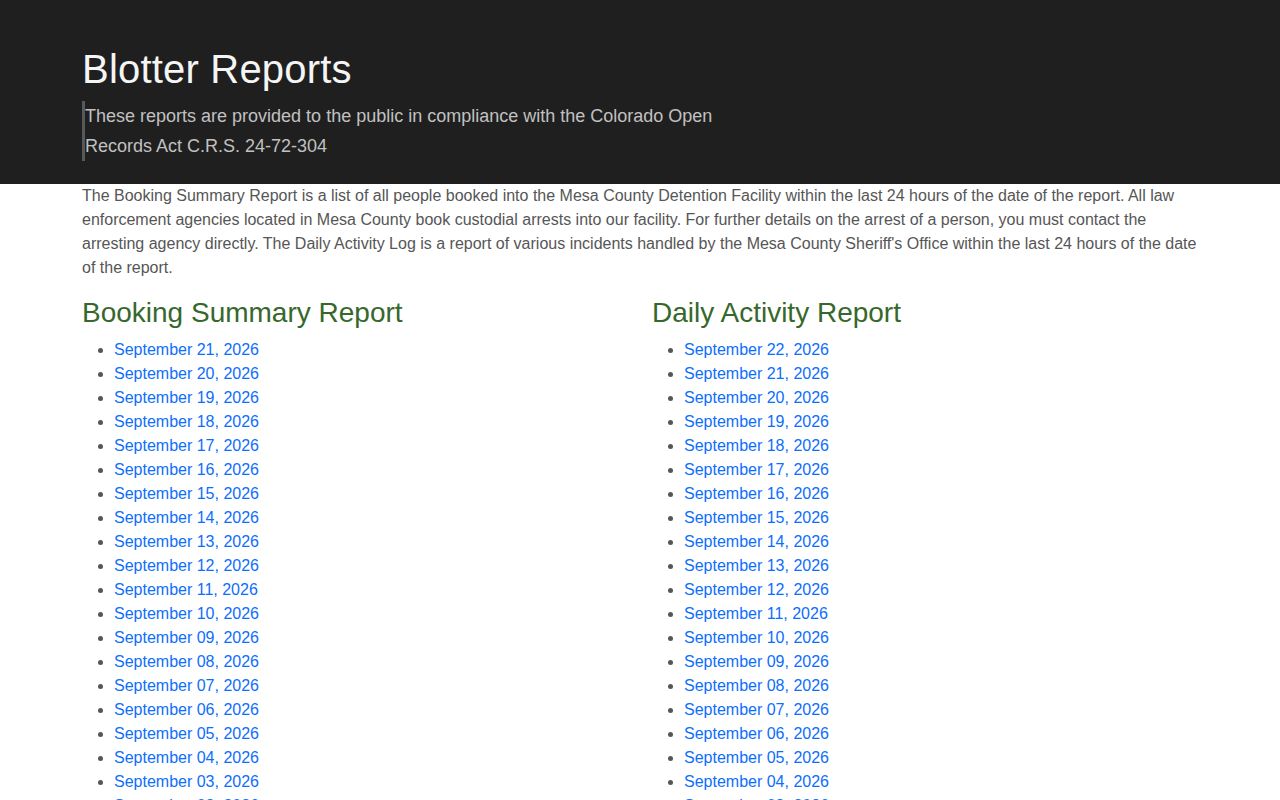
The list belongs to Mesa County's sheriff and detention system. Other counties work differently. Formats, update times, and photo fields vary by county. Weld County's official Jail Reports app separates daily arrests from current inmates and daily releases. Its arrest view sits apart from the current-custody screen. That split is a reminder. A booking event and an active jail stay are not interchangeable.
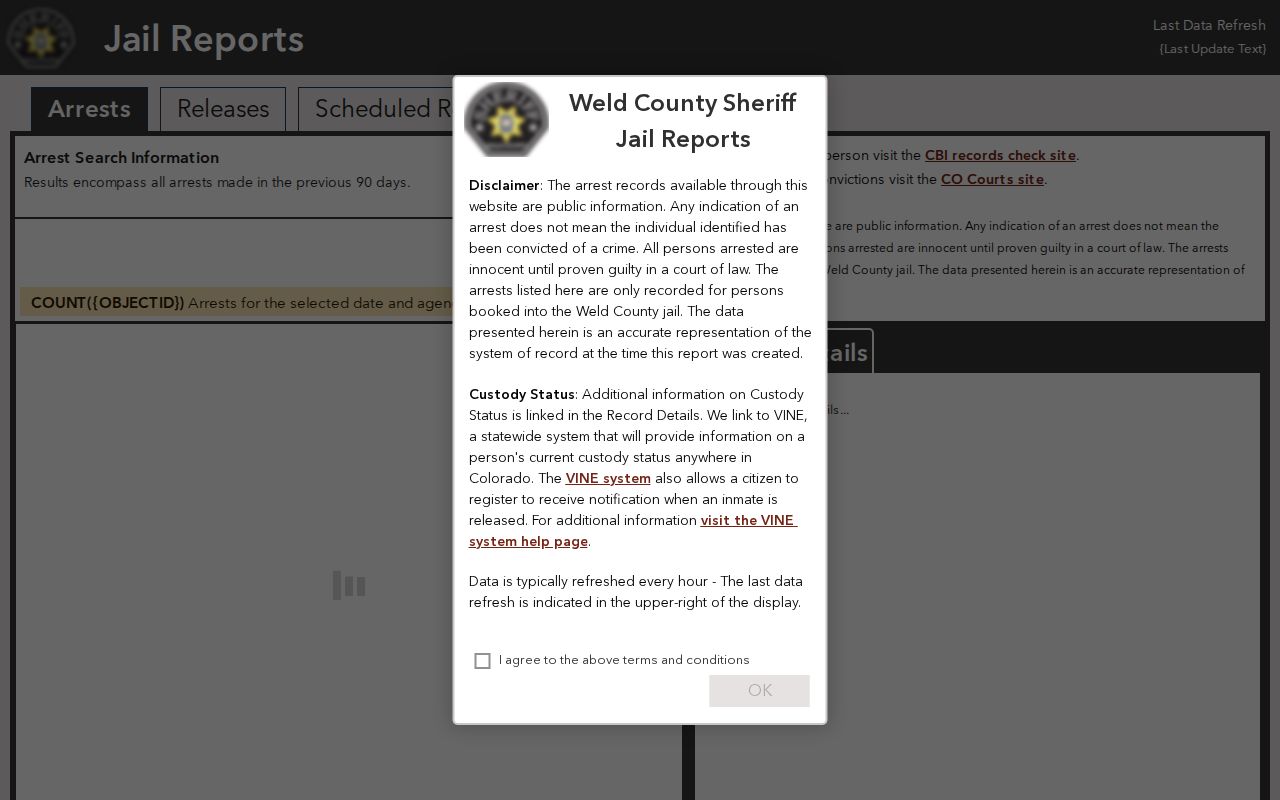
Booking and custody are two different things. The Weld example makes that plain. A county system may tag which agency brought someone in. The fields differ from place to place. A CSP label ties an arrest to a county booking. It does not replace the patrol's own report. Even after release, the booking record can survive while the live roster moves on. When a later sentence puts the person in state prison, that is a separate custody stage. The Colorado Department of Corrections Offender Search covers it.
Colorado CSP Arrest Report Requests
Start with the agency's own paperwork. To request a CSP arrest, field, or incident report, file the CSP 402C Public Record Request form. It asks for a precise description plus a signature. It also carries the direct-solicitation certification required under the Colorado records framework. Asking for every record tied to an event tends to slow the search. It can also invite more review time. This route is separate from asking a county jail for a booking record or photo. Identify the custodian and the item. Separate an arrest or field report from a crash investigation, a citation, or a booking photograph. The request sequence runs:
- Choose the CSP form for the patrol or incident record, not a county jail status question.
- Describe the record with the event date or range, location or county, involved CSP unit if known, and the specific report or citation sought.
- Complete the required signature and certification, then send the form to cdps_cspcorarequests@state.co.us.
- Review the response for any fee estimate, deposit request, redaction, or clarification needed from the requester.
The CSP fee schedule lists these charges and cost rules:
| Request item | Published amount or rule |
|---|---|
| Initial criminal-justice record, up to ten pages | $5 |
| Standard paper copies | $0.25 per page |
| Agency-record check | $7.50 |
| Media, disc, and postage charges | $5 where applicable |
| Staff research, review, production, or redaction | $30 per hour; the form says the first hour of staff research is free, and a deposit may be required |
Fees come first. Check the current CSP fee schedule before you submit anything. It lists photo or disk charges where they apply. Final cost can hinge on format and how much staff work a request demands.
For the agency's ground rules, the release and disposition policy covers field reports, arrest and crash-investigation records, redactions, and retention. CSP publishes no guaranteed production deadline. Timing depends on redaction volume, active use or storage, format, and the custodian's workload. No fixed statewide turnaround applies to every request.
Note: A fee estimate can shift when the requested format or the amount of redaction work changes.
Colorado CSP DUI Arrest Campaigns
CSP teams with the Colorado Department of Transportation on periodic DUI and traffic-safety pushes. The 2026 CDOT Summer Blitz release described an early-summer enforcement window with CSP and local agencies, involving checkpoints or saturation patrols plus a prior-year arrest count. That number belongs only to the campaign period in the release. It is not a live count of CSP arrests across Colorado.
The CDOT traffic-safety mobilization page widens the campaign picture. CSP also publishes selected traffic-safety work, like its stay-in-your-lane and crosswalk enforcement release or the seasonal southeast Colorado snowstorm warning. A campaign post can summarize an operation without listing every stop, contact, arrest, or booking.
For a specific person, go back to the event date and county. Campaign pages tell you what CSP and its partners said about an operation; the receiving jail tells you whether it reports the person in custody. Treat a selected news item as context, not a full incident log. A missing press release settles nothing about whether an individual was arrested.
CSP's 2024 annual report describes six communications centers, round-the-clock dispatch, and its district and troop structure. The annual report offers operational context, not an online dispatch search. A statewide agency can field calls around the clock while releasing only chosen public updates.
Colorado CSP Districts and Arrest Records
CSP's organization chart and annual report show five districts with troops beneath them. They also list six communications centers. A district or troop reference in a release can point to the patrol area or unit tied to an event. That helps narrow a request, especially when a release names a region but no jail.
None of that changes the custody route. A district is not a jail. A communications center is not an arrest roster. After a CSP stop lands someone in jail, find the county serving the place of arrest. Check that county's booking source. When the question is what CSP recorded in the field, send the agency a narrow report request. Include date, place, and any known unit or region.
The CSP organization chart explains the agency's shape. It is not a county directory, a daily bookings list, or a court docket. A unit label can guide a search. The custodian and the record type decide which source answers it.
Note: A troop label narrows CSP's unit context but does not identify the county jail that received a booking.